The weekly manual work should run itself
Answering the same WhatsApp question forty times a week, posting the same promotion to four platforms by hand, retyping the same numbers into the same spreadsheet — none of that is a staffing problem. It is an automation problem, and it is usually a few days of work to remove permanently.
Automation doesn't replace your team. It stops paying them to copy and paste.
Every task someone does the same way each week — forwarding, reformatting, posting, reconciling — has a cost nobody writes down, because it arrives in minutes. Added up, it's almost always more than it would cost to make it run by itself. Good automation is invisible: one day that task simply stopped existing.
Put in your numbers.
Map the task
What comes in, what goes out, who does it today and how often.
Build the pipeline
A bot or a scheduled job, wired to the tools you already use.
Run it with guardrails
A daily cost cap and a fallback at every external call.
You just approve
Review the result and publish in one tap — or let it run on its own.
A bot that knows your business
WhatsApp answering from your actual documents and prices, not from a generic script — with a real handover to a person the moment the question needs one, and the bot going quiet as soon as someone takes over.
Post once, publish everywhere
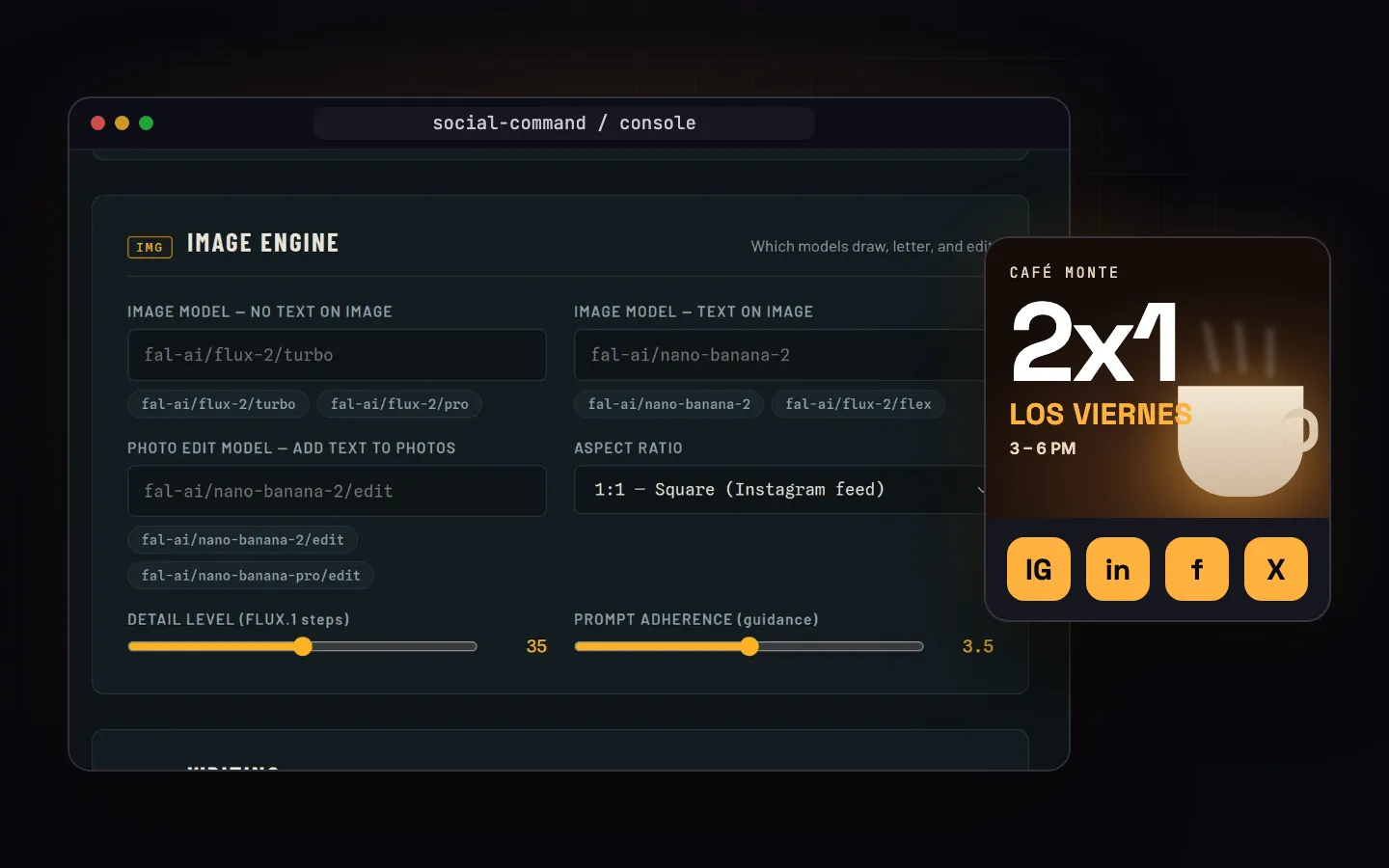
One message in, per-platform copy and imagery out, published to Instagram, LinkedIn, Facebook and X in a single tap.
Costs that track intent
The expensive AI model runs only when the job actually needs it. On the social bot that is roughly nine cents for a designed promo image and about a penny for everything else, with a daily cap so a bad day cannot become a bad invoice.
Fails soft, never silent
Layered fallbacks at every external call, so a provider outage degrades the output instead of taking the whole thing down.
Yours to tune
Models, prompts, brand voice and API keys editable from an admin console — changing how it writes is a form submission, not a redeploy.